Havana is not one city. It is five cities layered on top of each other, each with its own rhythm, its own colors, its own stubborn soul , and all of themásimultaneously, achingly, irreducibly Havana.
To understand this, you only need to stand at the intersection where crumbling Centro Habana bleeds into the baroque grandeur of Old Havana, where a man in a 1957 Chevrolet waits at a light beside a cyclist balancing three bags of rice, while from a third-floor window comes the sound of someone practicing piano scales, languid and unhurried in the afternoon heat. This is not one city experiencing one moment. It is several cities experiencing several centuries, simultaneously, without apology.
Each of Havana's neighborhoods rewards a different kind of traveler. The history devotee will lose herself in La Habana Vieja for days without surfacing. The night owl will find his people in Vedado, where the jazz clubs don't get going until midnight and the rum is cold. The family seeking space and quiet will breathe easier in Miramar's wide avenues. And the traveler who wants to see Cuba unfiltered , the real Cuba, the complicated, beautiful, impossible Cuba, needs to spend at least one afternoon in Centro Habana. Each barrio has its own food personality , see Havana's vibrant food markets which anchor community life across every neighborhood.
This guide takes you through all five. Read it before you book. It might change everything.
UNESCO World Heritage Site
La Habana Vieja , Old Havana
If Havana has a heartbeat, it lives in La Habana Vieja. Step through the archway of the Puerta de la Tenaza and you step into another world , one of sun-bleached plazas, baroque church facades, and cobblestone streets that narrow into shadowed alleys smelling of coffee and salt air. The light here does something extraordinary in the late afternoon, turning every surface to amber and every shadow to purple.
 Photo: Wikimedia Commons
The Plaza de Armas is where you should begin any morning. Secondhand book vendors set up their stalls beneath the ceiba trees , first editions of Hemingway, volumes of Cuban poetry, old maps of the city , while pigeons strut across the cobblestones and the cathedral doors open to reveal cool, incense-scented darkness within. Sit at one of the outdoor cafés with a café cubano and watch the city slowly wake up. It is one of the most civilized experiences available to any traveler.
Plaza Vieja, a few blocks south, is another kind of beautiful , its ochre and terracotta facades restored to a splendor that makes it genuinely difficult to believe you're looking at a working neighborhood. Children play in the fountain at its center while their parents drink Cristal at the corner paladar. In the evenings, it fills with music.
The neighborhood is unabashedly touristy in parts , the main drag of Obispo Street is lined with souvenir shops and overpriced mojito bars , but venture half a block off the main routes and the tourist infrastructure falls away completely, replaced by the real life of a real Cuban neighborhood: laundry lines strung between balconies, domino games at plastic tables, the sound of a novela drifting through an open window.
Culture, Nightlife & Mid-Century Glory
Vedado , The Living City
Vedado is what Havana looked like when optimism was still abundant. Developed in the early twentieth century and hitting its architectural peak in the 1940s and 50s, the neighborhood is a grid of wide, tree-canopied boulevards lined with mansions , some restored to their former glory, others gracefully crumbling behind overgrown gardens , that speak of a particular kind of faded grandeur. It is the Havana that Hemingway actually lived in, and it has aged with considerably more character than most places do.
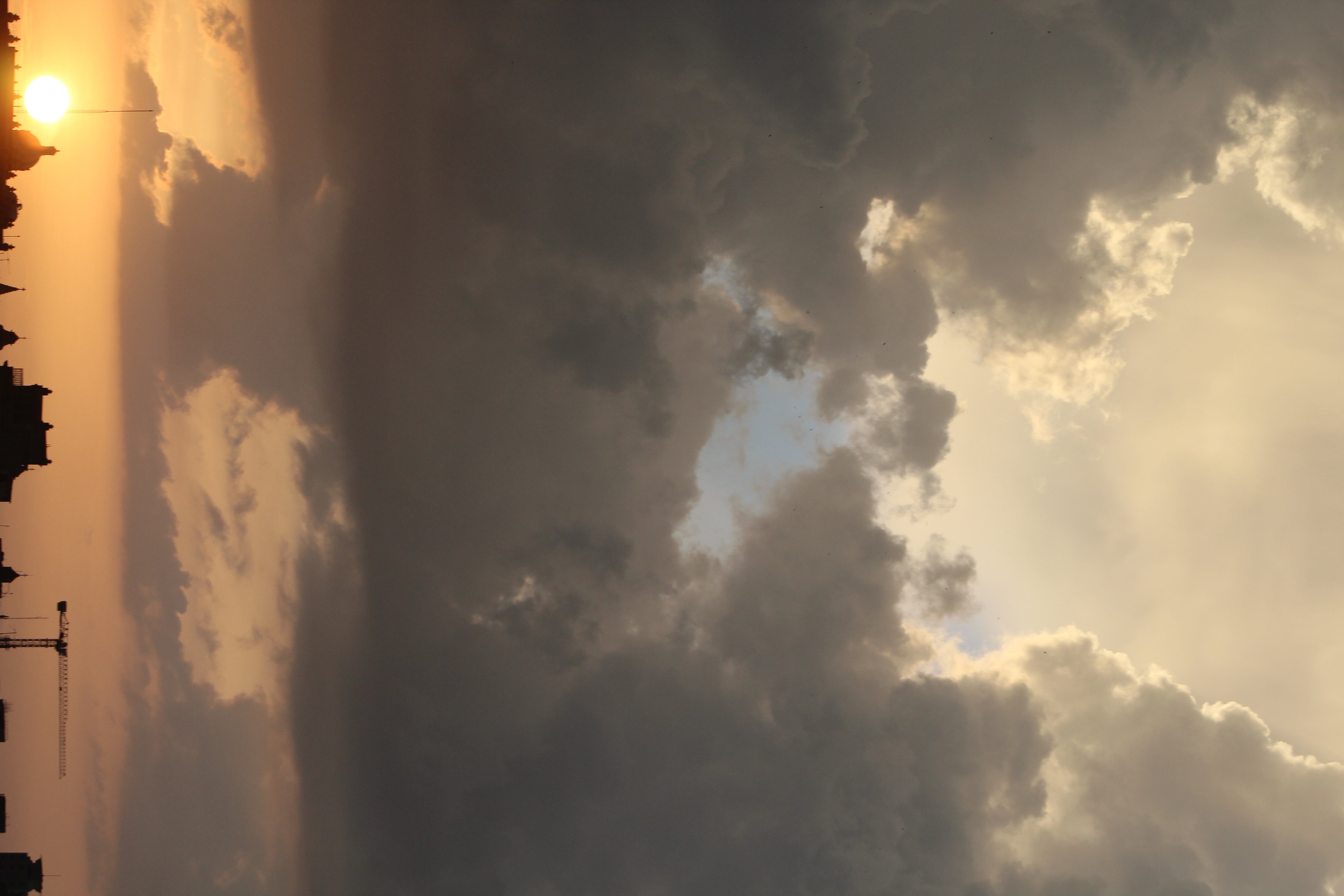 Photo: Wikimedia Commons
The Hotel Nacional de Cuba lords over the Malecón from its hilltop perch, looking precisely as an Art Deco grande dame should look , imperious, romantic, slightly worn at the heels. Even if you're staying elsewhere, come for a drink at the terrace bar, order a daiquiri, and watch the sun sink into the Florida Straits. The ghosts of Frank Sinatra and Winston Churchill will keep you company.
La Rampa , 23rd Street , is Vedado's main artery. Cinemas, theaters, outdoor bars, and the ICAIC film institute line its length. This is where young Habaneros actually spend their evenings, where the jazz clubs (El Gato Tuerto, La Zorra y el Cuervo) don't really begin their sets until 11 PM, and where the energy of a city still very much alive asserts itself against every narrative of decline.
The Copelia ice cream park , a 1960s modernist landmark beloved by every Cuban , is not to be missed. Join the queue with locals for a peso-priced ice cream experience that is simultaneously delicious and one of the most authentically Cuban things you can do. The architecture alone is worth the trip.
The Diplomatic Quarter
Miramar , Wide Avenues & Embassy Row
Cross the Almendares River from Vedado and the city changes its register entirely. The streets widen. The palms grow taller. The pace drops a half-step, as if the heat itself has been turned down a notch. This is Miramar , Havana's diplomatic quarter, a neighborhood of embassies, wide residential boulevards, and some of the finest private restaurants the city has to offer.
Quinta Avenida , Fifth Avenue , is Miramar's spine, an eight-lane boulevard flanked by manicured lawns and ornamental palms stretching west toward the coast. The mansions along its length now house embassies, joint-venture offices, and the occasional upscale casa particular, their iron gates and terracotta roofs suggesting the comfortable lives they once sustained before 1959 and the different, quieter lives they sustain now.
The dining scene in Miramar is genuinely impressive by any standard. Several of Havana's most celebrated paladares are here , places where Cuban cuisine is elevated into something approaching fine dining, where the octopus is local and the presentation is artistic and the wine list is surprisingly international. La Guarida, the most famous paladar in Cuba, is a short taxi ride into Centro, but Miramar's own restaurant row along 5th Avenue is not far behind.
For travelers, particularly families or those staying longer than a week, Miramar offers something Old Havana cannot: space. Room to breathe. Quieter streets to walk in the evenings, better odds of a casa with a garden, and a sense of the residential city that the tourist corridors elsewhere don't provide.
Raw, Real, Unfiltered
Centro Habana, The Beating Heart
Centro Habana is where the postcard ends and the city begins. There are no restored colonial plazas here, no polished museum restaurants, no curated tourist experience. What there is, instead, is life , raw, dense, urgent, and more beautiful than almost anything you'll see anywhere else in the city.
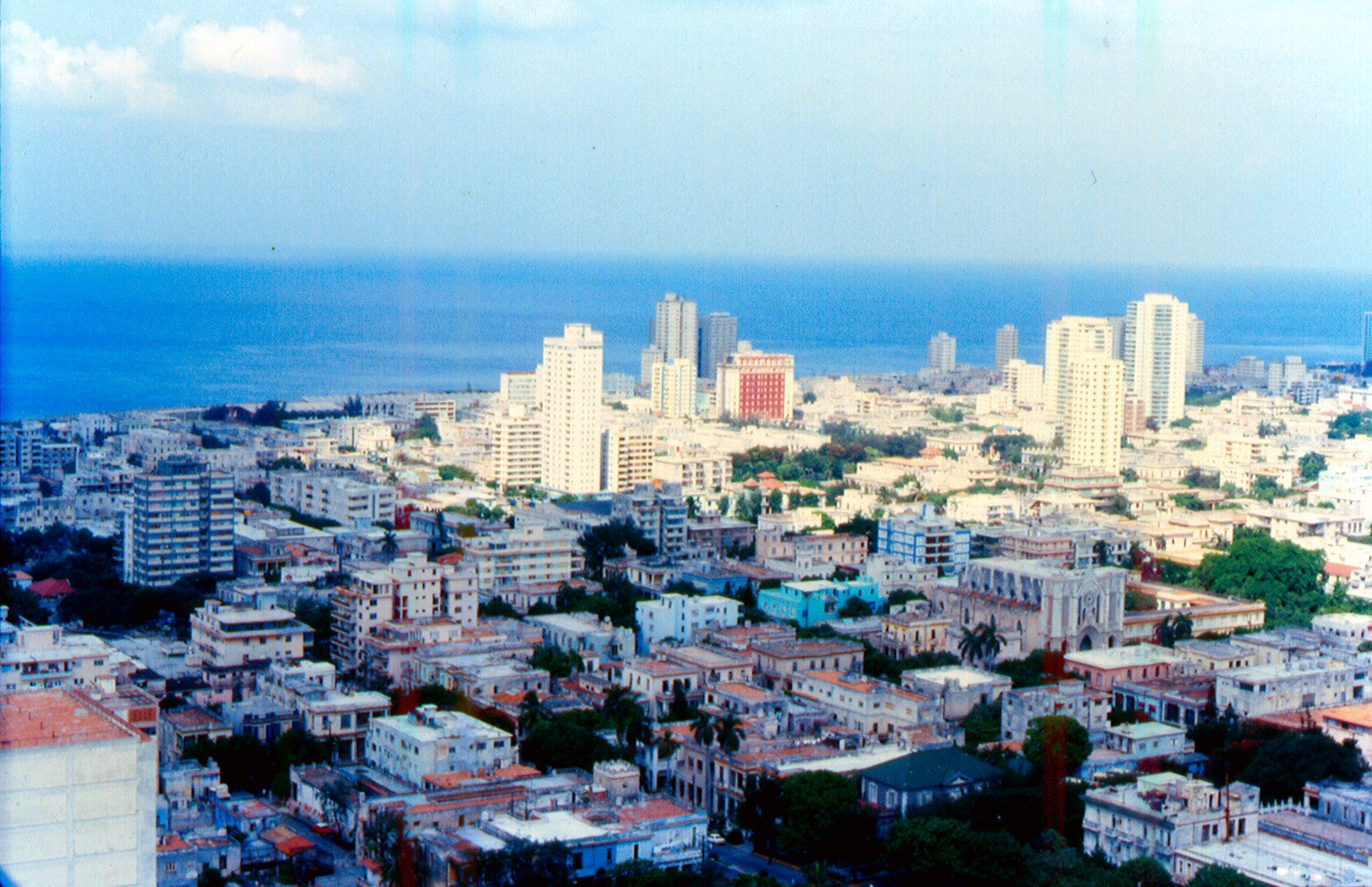 Photo: Wikimedia Commons
Walk any block of Centro Habana and you will encounter: laundry strung on lines between iron balconies like prayer flags; old men playing dominoes at folding tables with the gravity of chess grandmasters; children in school uniforms chasing something small down an alley; the smell of garlic and rice and engine oil rising together from a dozen open windows; a 1953 Oldsmobile idling at a corner, its engine ticking like a clock counting down to something.
The Malecón , Havana's legendary seafront promenade , runs along Centro's northern edge, and this stretch is arguably its most vivid. Families set up here in the evenings, fishermen cast lines from the wall, teenagers in couples find their few square feet of privacy, and the Atlantic spray comes over the seawall in great arcing curtains when the wind is up. At sunset, the light turns everything gold, and the crumbling facades behind you become something that feels, absurdly, like beauty so intense it almost hurts.
Barrio Chino , Havana's Chinatown , occupies a few compact blocks of Centro, the remnant of a once-significant Chinese-Cuban community. The restaurants have adapted to Cuban ingredients, the signs are in Spanish, and the result is a fusion that is entirely its own thing. Worth exploring for lunch.
A note: Centro Habana is not a neighborhood for the cautious. It is dense, occasionally chaotic, and requires the kind of urban awareness you'd bring to any unfamiliar city. But it rewards the adventurous traveler more richly than perhaps any other neighborhood in Havana.
Centro Habana does not perform for tourists. It simply lives , magnificently, defiantly, in full color , and lets you witness it if you're brave enough to show up.
Modern Havana by the Sea
Playa , Beach Access & Quiet Residences
West of Miramar, the city continues its westward sprawl into Playa , a broad, residential district that offers something the rest of Havana largely doesn't: direct access to the sea. The neighborhood's coastline, while not Cuba's finest, provides genuine beach options within the city limits, a rarity that makes it popular with locals escaping the urban heat.
Playa is where the Tropicana Cabaret lives , the legendary open-air nightclub that has been running since 1939, staging its spectacular fusion of dance, music, and feather-adorned spectacle under a canopy of marabu trees. It is an experience that defies easy categorization: simultaneously kitsch and genuinely extraordinary, touristy and irreplaceable. Reserve in advance; it remains one of the most in-demand tickets in Cuba.
The neighborhood itself is quieter and more spread out than its neighbors, its residential streets lined with post-new housing alongside older villas. For travelers who want to be based in Havana but prefer calm over chaos, who have a rental car or are comfortable in taxis, Playa's casas particulares offer excellent value and a more authentically residential experience of the city.
🤔 So , Which Neighborhood Should You Stay In?
🏛️ La Habana Vieja
The obvious choice for first-timers. Walking distance to everything historic. Slightly touristy but unbeatable for atmosphere and convenience. Stay near Parque Central.
🌃 Vedado
For travelers who want culture, nightlife, and the feeling of a real city neighborhood. Great jazz clubs, excellent casas, and the Hotel Nacional on your doorstep.
🌴 Miramar
Best for families, longer stays, or anyone wanting more space. Quieter, more residential, and home to some of Havana's finest private restaurants.
The honest answer, of course, is that where you stay matters less than how you show up. Havana will find you in any neighborhood , will press its history and its beauty and its relentless human energy into whatever corner of the city you choose to inhabit. The casas particulares scattered across all five neighborhoods all have one thing in common: a host who will pour you rum and tell you stories and send you out into the city with better directions than any map could provide.
Stay somewhere that feels right. Then get out of it and wander. That's always the answer in Havana. Our complete guide to paladares across every Havana neighborhood will help you eat like a local wherever you stay.